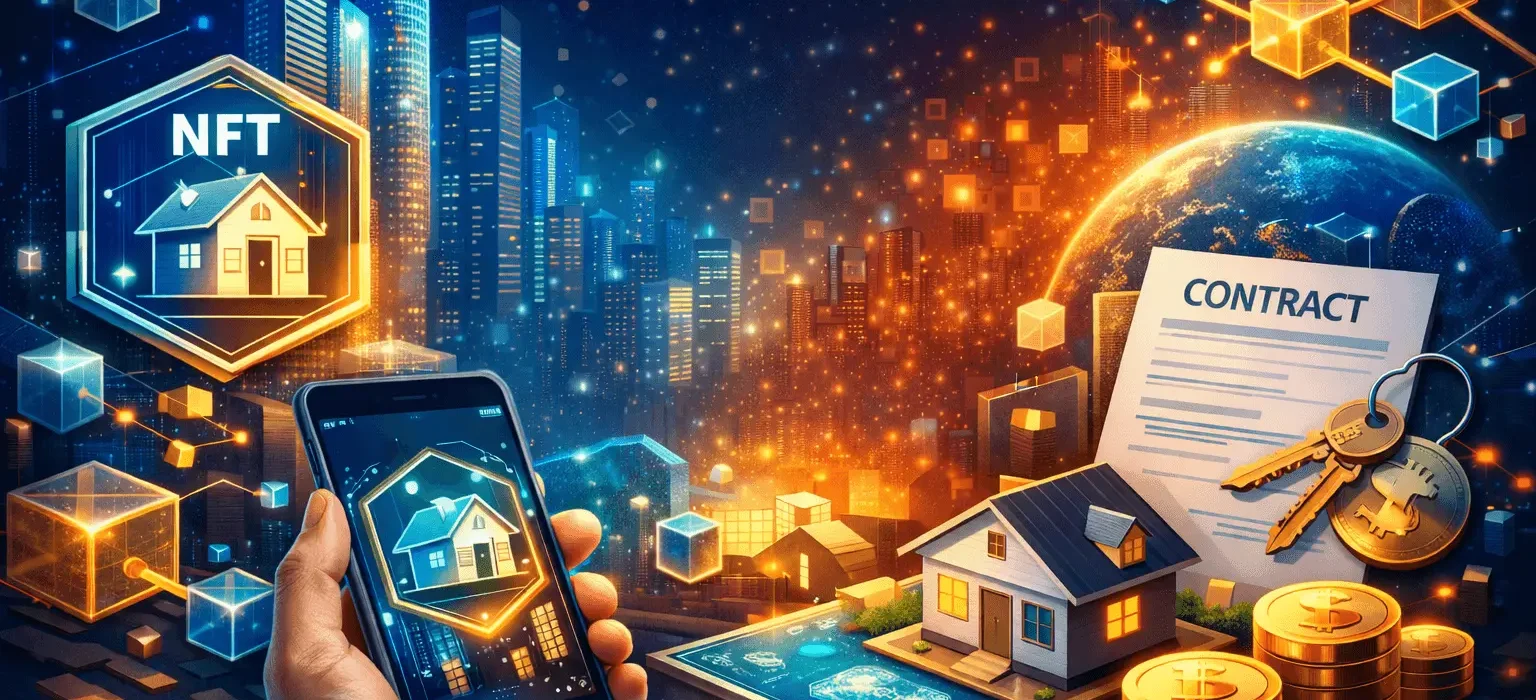
Blockchain technology is rapidly transforming how assets are owned, traded, and managed across industries. From cryptocurrencies to non-fungible tokens (NFTs), blockchain introduces a decentralized, transparent, and secure system that challenges traditional financial models. One of the most promising sectors now exploring this innovation is real estate.
NFTs are redefining property ownership by digitizing assets and simplifying transactions that once required extensive paperwork, intermediaries, and time-consuming verification processes.
What Are NFTs?
Non-fungible tokens (NFTs) are unique digital assets recorded on a blockchain. Unlike cryptocurrencies, which are interchangeable, each NFT carries a distinct identity and represents ownership of a specific item. NFTs can be purchased or sold using cryptocurrency or fiat money, depending on the platform.
While NFTs initially gained popularity in digital art, music, and gaming, their application is now expanding into high-value physical assets—most notably, real estate.
How NFTs Are Changing the Real Estate Industry
In real estate, an NFT can represent ownership of a physical or virtual property. All critical details—such as ownership history, legal documents, and property specifications—are embedded within a smart contract. This contract is then minted as an NFT and listed on a digital marketplace.
Once listed, buyers can place bids. After a successful transaction and legal verification, ownership of the NFT is transferred to the buyer’s digital wallet, signifying control over the property.
This process reduces reliance on traditional intermediaries and minimizes the risks associated with manual documentation.
Benefits of Using NFTs in Real Estate
1. Faster Property Transactions
Traditional property deals often involve banks, agents, and government offices, resulting in long processing times. NFTs automate these steps through smart contracts, enabling near-instant transfers once conditions are met.
2. Reduced Costs
By eliminating escrow services and third-party agents, NFT-based transactions significantly lower administrative and commission costs.
3. Enhanced Security and Transparency
Blockchain records are immutable and tamper-proof. Every transaction is traceable, reducing the chances of forged documents, double-selling, or fraudulent ownership claims.
4. Global Accessibility
NFTs allow international investors to participate in real estate markets without geographical restrictions, unlocking global investment opportunities.
How NFT-Based Property Transactions Work
The NFT real estate process begins with legal due diligence. Property data is verified and digitized, then embedded into a smart contract. This contract is minted into an NFT and listed on a blockchain-based marketplace.
Once a buyer purchases the NFT, funds are transferred digitally, and ownership rights are updated on the blockchain. Final legal procedures are completed according to local regulations, granting the buyer official ownership.
Although the process is digital, legal compliance remains essential, making professional guidance crucial.
Fractional Ownership Through Real Estate NFTs
One of the most impactful innovations enabled by NFTs is fractional property ownership. Instead of purchasing an entire property, investors can buy fractional NFTs representing a portion of the asset.
This model allows:
- Smaller investments
- Shared rental income
- Easier resale of ownership shares
Fractional ownership is especially beneficial for individuals who previously couldn’t afford traditional real estate investments, making property markets more inclusive.
Challenges Facing NFTs in Real Estate
Despite their potential, NFTs face significant obstacles:
- Regulatory uncertainty: Many countries lack clear legal frameworks for blockchain-based property ownership.
- Government concerns: Decentralized finance raises issues related to taxation, money laundering, and financial oversight.
- Legal incompatibility: Existing property laws often require physical documentation, making NFT integration difficult.
These challenges have slowed large-scale adoption, but they are not stopping innovation.
The Future Outlook of NFTs in Real Estate
NFTs and blockchain are still in their early stages within the real estate sector. However, industry analysts predict gradual regulatory reforms as governments recognize the technology’s benefits. NFTs are expected to play a key role in property crowdfunding, digital mortgages, and smart city developments.
As legal frameworks evolve and public trust increases, NFTs could become a standard component of real estate transactions worldwide.
Tags: Blockchain real estate, NFT property ownership, Digital real estate investment, Fractional property NFTs, Future of real estate technology, Smart contracts in real estate.
Blockchain property ownership Digital property tokens Fractional real estate NFTs NFT real estate investment Real estate innovation Smart contracts for property
Last modified: December 25, 2025