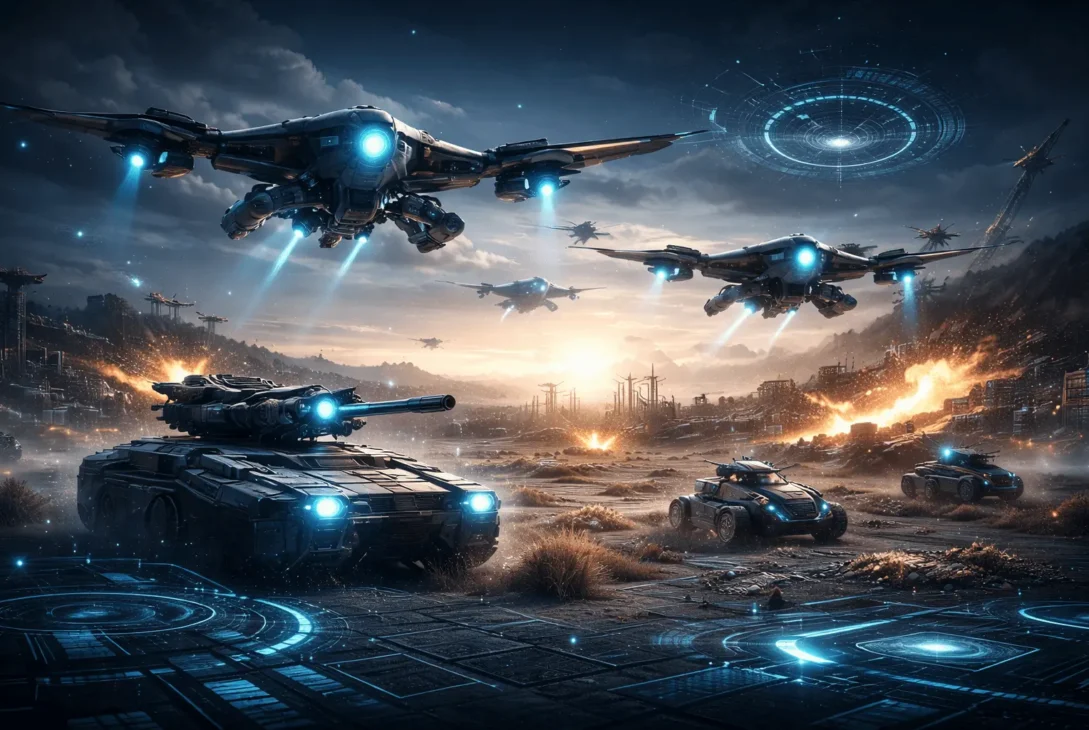
Artificial intelligence (AI) is no longer just a buzzword — it’s a central pillar of modern defense technology, reshaping how militaries operate, strategize, and defend against evolving threats. From autonomous drone fleets to AI-powered battlefield decision systems, AI is driving a profound transformation in global defense capabilities, increasing speed, precision, and operational flexibility like never before.
What Is Battlefield AI?
Battlefield AI refers to the application of artificial intelligence across defense systems — from surveillance and logistics to autonomous vehicles and predictive analytics. These systems analyze vast amounts of data in real time, empowering military commanders to make critical decisions instantly in high-pressure situations.
Some core battlefield AI technologies include:
- Autonomous drones and robotic vehicles for reconnaissance and strike operations.
- Predictive analytics to anticipate enemy movements and threats.
- AI-driven cybersecurity tools for protecting military networks and assets.
- Real-time decision support systems that enhance situational awareness.
Key Areas Where AI Is Revolutionizing Defense
1. Autonomous Drones and Robotics
AI is enabling drones to operate with minimal human input, gathering intelligence and executing complex missions in dangerous environments. These drones can independently navigate challenging terrains and adapt to mission changes, making them invaluable for surveillance and tactical operations.
2. Smart Targeting and Precision Weapons
AI integrates advanced sensors, machine vision, and algorithm-driven targeting to identify threats faster and with higher accuracy. This results in reduced collateral damage and faster response times on the battlefield.
3. Networked Battlefield Intelligence
By connecting vehicles, troops, drones, satellites, and command centers, AI unifies data streams into a cohesive battlefield picture. This C4ISR (Command, Control, Communications, Computers, Intelligence, Surveillance and Reconnaissance) integration enhances coordination and accelerates strategic decisions.
4. Laser and Directed Energy Defense Systems
AI is increasingly incorporated into next-generation defense technologies, including high-energy laser systems that can counter drone threats and other airborne targets. These systems use AI for targeting and stabilization to increase accuracy and effectiveness.
Benefits of AI in Modern Defense
✔ Faster Decision Making — AI systems process data in milliseconds, enabling rapid tactical responses that human operators can’t match.
✔ Improved Accuracy — Machine learning refines targeting, reducing errors and unintended consequences.
✔ Lower Human Risk — Autonomous vehicles and robotics can perform dangerous missions without putting soldiers in harm’s way.
✔ Strategic Edge — Countries investing in AI defense gain a significant advantage in readiness and capability.
Challenges and Ethical Considerations
Despite its impressive potential, battlefield AI raises important concerns:
- Ethics and accountability: Should AI ever make life-or-death decisions without human oversight? Critics argue for strict human control over lethal systems.
- Data vulnerabilities: AI systems are only as strong as the data they learn from, and adversaries may attempt to mislead or corrupt these data streams.
- Regulatory gaps: International laws have not kept pace with rapid technological change, creating legal ambiguities around autonomous weapons.
Future Outlook of AI in Defense
Experts forecast that AI will continue to dominate defense innovation in the coming decades, playing a central role in next-generation warfare, multi-domain operations, and autonomous logistics systems. Partnerships between defense agencies and tech startups are accelerating this transformation, drawing rapid innovation into military applications.
Tags: AI defense technology, battlefield AI systems, autonomous military drones, modern warfare technology, AI in military applications, defense innovation trends.
AI defense technology AI in military applications autonomous military drones battlefield AI systems defense innovation trends modern warfare technology
Last modified: December 25, 2025